What Is an Agent Runtime? Why Your AI Stack Depends on It
What Is an Agent Runtime? Why Your AI Stack Depends on It
An agent runtime is the execution environment that keeps an AI agent alive between steps — managing state, handling retries, routing tool calls, and surfacing observability data. Without it, you don't have an agent; you have an expensive autocomplete loop. Before you pick a no-code builder or sign a platform contract, you need to understand what lives underneath the interface — because that infrastructure determines whether your agents actually finish the job.
---
What is an agent runtime, exactly?
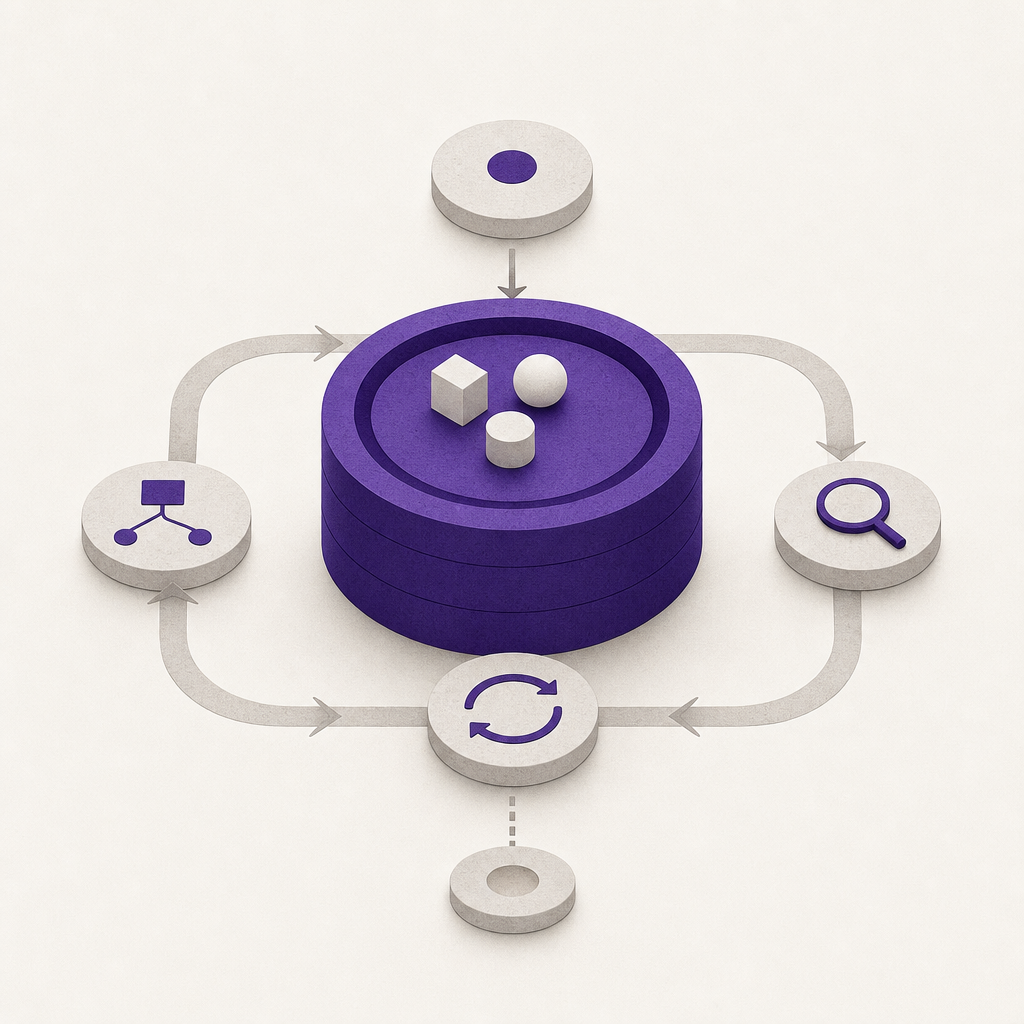
An agent runtime is the software layer that executes, monitors, and recovers an AI agent's multi-step task loop.
Think of it this way: a large language model decides what to do next. The runtime actually does it — and keeps doing it when things go wrong. It holds the task state across steps, manages tool calls to external APIs, enforces retry logic when a call fails, and logs every decision for audit.
Most vendor demos skip this layer entirely. They show a clean chat interface. They show an output. They never show you what happens when the third API call times out at 2 a.m.
That gap is where enterprise AI deployments fail.
---
Why does the runtime layer determine whether your agents succeed or stall?

The runtime is the difference between a demo that works once and an agent that runs 10,000 times reliably.
Enterprise workflows are not linear. A procurement agent might need to query an ERP, call a supplier API, wait for an approval webhook, and update a ledger — in sequence, with error handling at every step. Without a production-grade runtime, each of those transitions is a failure point with no recovery path.
Four things a runtime must handle:
- State persistence — remembering where the task is across steps, sessions, and retries
- Tool orchestration — calling the right API or model at the right moment
- Retry and fault tolerance — recovering from failures without human intervention
- Observability — logging decisions, latency, and errors so engineers can diagnose and improve
Miss any one of these and your "agentic" system is a fragile script wearing an AI costume.
---
How does Nagent's runtime infrastructure handle these requirements?

Nagent's Agent Orchestration layer manages multi-step execution, tool routing, and fault recovery across every agent deployed on the platform.
At the memory layer, Agent Smriti provides vector and episodic memory — meaning agents carry context across sessions, not just within a single conversation window. That matters enormously for complex operational workflows where a task spans hours or days.[^2]
The continuous learning layer, KARMIC, uses multi-source reinforcement learning to refine agent behavior over time — scoring decisions against ethical, performance, and business outcome signals.[^3] This isn't a static model. The runtime gets measurably better as it accumulates real task data.
> "Agentic systems must operate with institutional memory, adaptive policies, and real-time orchestration — not just prompt chains." — The Autonomous Bank, Nagent AI [^2]
For enterprise architects, this means the runtime is not a black box. Every decision is traceable, every retry is logged, and every tool call passes through an orchestration layer that enforces policy.
---
What should you look for before choosing a no-code agent builder?
Ask five infrastructure questions before you evaluate any interface.
- Where is state stored? If task state lives only in the LLM context window, you have no persistence. Ask for a specific answer — database, vector store, or episodic memory layer.
- What is the retry model? Exponential backoff? Dead-letter queues? Or does a failure just silently drop the task?
- How are tool calls authenticated and rate-limited? A runtime calling 50 external APIs needs credential management and rate-limit handling built in — not bolted on.
- What observability does it expose? You need logs, latency metrics, and decision traces — ideally surfaced in a dashboard your SRE team already uses.
- How does the runtime handle concurrent agents? A single-agent demo is easy. Ask what happens when 200 agents run simultaneously across different business units.
Nagent's Build Craft addresses these questions at the platform level — so engineering teams aren't rebuilding infrastructure primitives every time they deploy a new use case.[^1]
---
When does the runtime layer become a competitive advantage — not just plumbing?
When agents learn, adapt, and coordinate — the runtime becomes a strategic asset.
In FMCG, agentic systems are already coordinating demand sensing, supplier negotiation, and shelf optimization across parallel workflows.[^1] In wholesale banking, agents are handling compliance checks, counterparty risk scoring, and client onboarding — tasks that previously required analyst hours at every step.[^2]
The organizations winning these deployments are not the ones with the best prompts. They are the ones with runtimes that handle failure gracefully, accumulate institutional memory via tools like Agent Smriti, and surface enough observability data that engineering teams can improve performance week over week.
Nagent's Sovereign AI architecture adds a further layer: data residency and policy enforcement at the runtime level, so regulated industries can deploy agents without routing sensitive data through external infrastructure.
That is what separates an agentic AI platform from a wrapper around an LLM API.
---
Related reading
- How Agent Orchestration works inside Nagent
- What KARMIC's continuous learning means for enterprise deployments
- Agentic AI in banking: the autonomous bank blueprint
- Build your first agent in Agent Studio
---
Frequently Asked Questions
What is an agent runtime in simple terms?
An agent runtime is the execution environment that runs an AI agent's multi-step task loop. It manages state between steps, routes tool calls, handles retries when something fails, and logs decisions for observability. Without a runtime, an LLM can reason about a task but cannot reliably complete one.
How is an agent runtime different from an LLM or a chatbot?
An LLM generates the next action. A chatbot responds to a single prompt. An agent runtime executes a sequence of actions — across tools, APIs, and time — and recovers when steps fail. The runtime is the infrastructure that makes multi-step autonomy possible at enterprise scale.
What runtime capabilities should I require before buying an agentic AI platform?
Require state persistence, tool orchestration, fault-tolerant retry logic, and structured observability as table-stakes features. Platforms that cannot answer specific questions about each of these — by name, with documentation — are not production-ready for enterprise workloads.
Does Nagent's Agent Studio come with a built-in runtime?
Yes. Agent Studio deploys agents on top of Nagent's Agent Orchestration layer, which handles state, retries, and tool routing by default. Engineers configure agent logic; the runtime handles execution infrastructure. You do not need to build or manage runtime primitives separately.
Why do most agentic AI demos hide the runtime layer?
Because demos are designed to show outcomes, not infrastructure. A polished interface and a successful single-run demo do not reveal how the system handles concurrent load, API failures, or long-running tasks. Asking runtime questions directly — before signing a contract — is the fastest way to separate production-ready platforms from demo-ware.
---
What's next
See how Nagent's runtime infrastructure performs on your actual workflows — book a free 30-minute demo at nagent.ai.
Sources
- The Agentic FMCG Playbook _(pdf)_
- The autonomous bank in Agentic Era _(pdf)_
- Agentic AI SYSTEM _(pdf)_