Why Ecommerce Ad Creative Is Slow (It's Not Headcount)
Why Ecommerce Ad Creative Is Slow (It's Not Headcount)
The real reason your ad creative pipeline is slow isn't headcount — it's architecture. Most ecommerce creative teams are built around sequential human handoffs: brief to script, script to production, production to format adaptation. Each handoff adds days. Add them up and a single campaign takes three to five weeks from idea to live asset. More designers don't fix a structural problem. AI tools for ecommerce ads that replace the handoffs — not assist around them — do.
Why Is Ecommerce Ad Creative So Slow in the First Place?
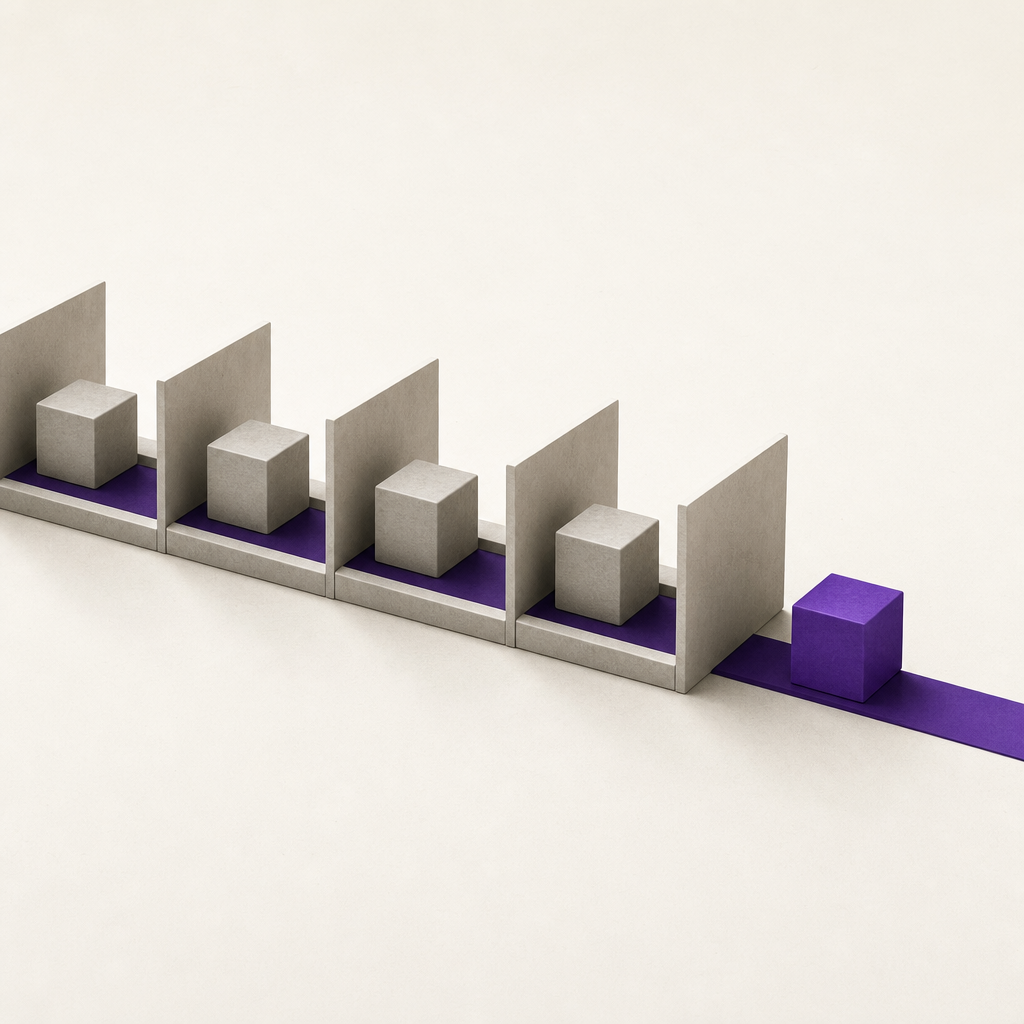
Sequential handoffs are the bottleneck, not your team's capability.
Walk through a standard D2C campaign. A performance marketer writes a brief. It sits in a copywriter's queue for two days. The script goes to a video producer. The producer queues it behind three other briefs. The finished cut goes back for review. Then someone adapts it for Reels, Shorts, and Stories — each a separate task. At every stage, one person finishes and another starts.
That's not a talent problem. That's a relay race where the baton gets dropped between each leg.
"The average time-to-live for a performance video ad, from brief to approved asset, is 3–5 days at best — and 2–3 weeks at worst for teams running multi-SKU campaigns."
The irony: your creative team is talented. They're just spending most of their time in the handoffs, not in the work.
What Does "Architectural Bottleneck" Actually Mean?
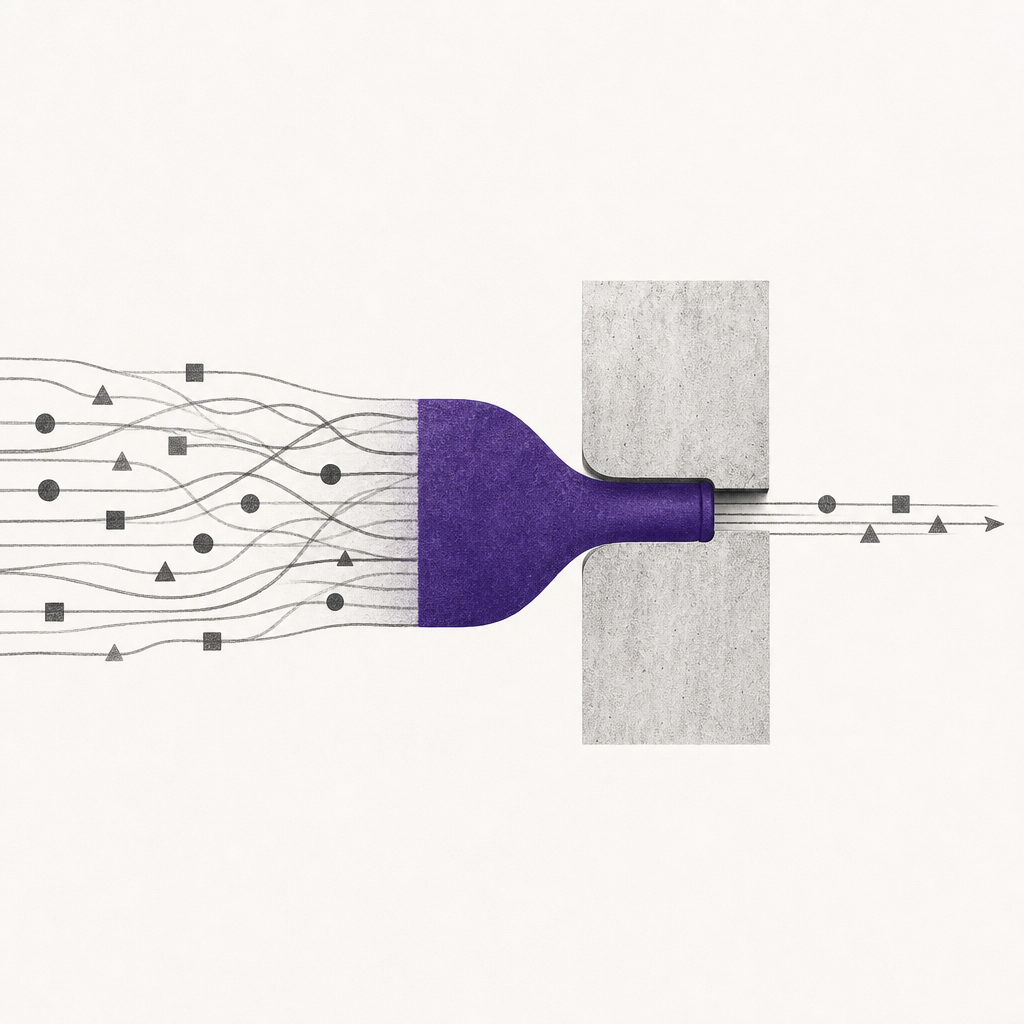
It means the structure of how work moves is the constraint — not the speed of individuals inside it.
Think of it this way. You can hire five more copywriters. But if they still hand scripts to a separate production team, who then hand cuts to a separate adaptation team, you've added cost without removing friction. The pipeline has the same number of joints. Joints are where work stops.
The architectural fix isn't adding more people to a broken conveyor belt. It's collapsing the conveyor belt into a single, continuous loop.
That's what an agentic production model does.
What Is an Agentic Creative Production Loop?
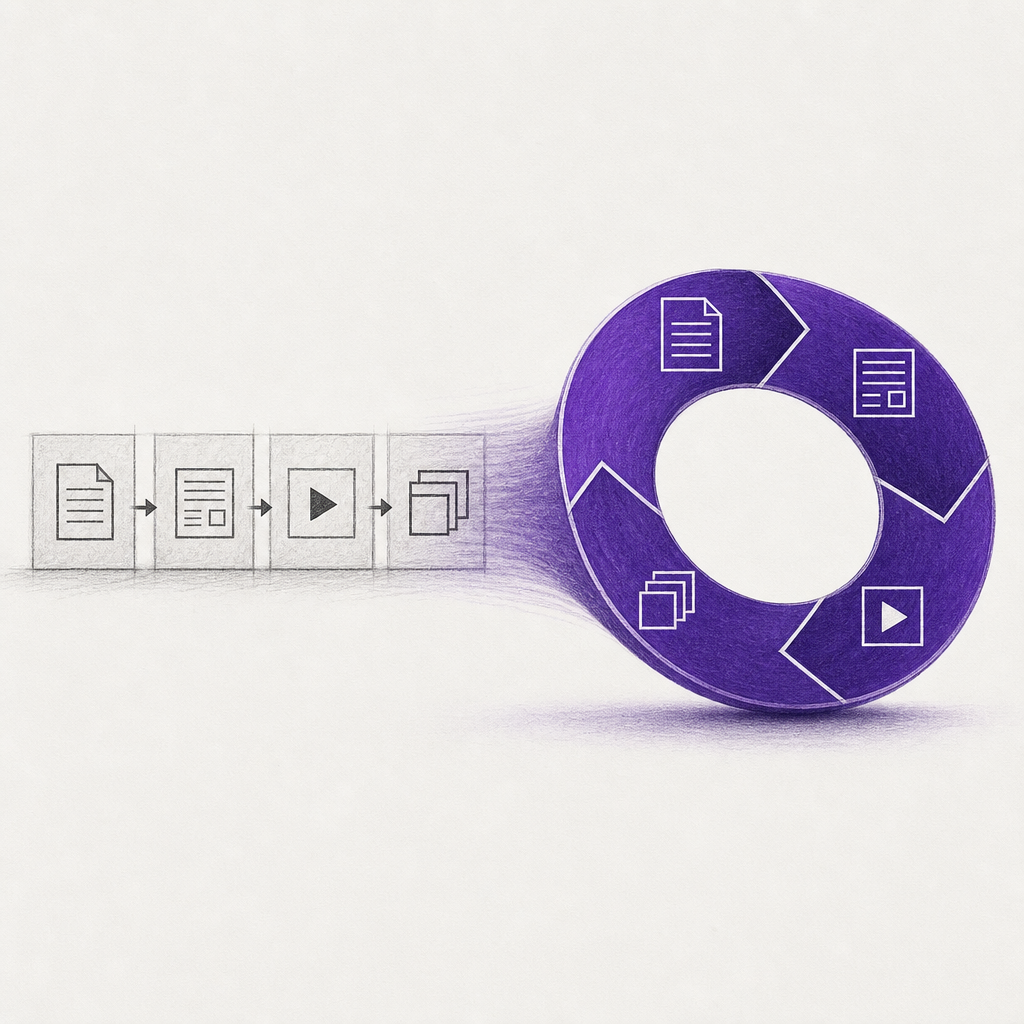
An agentic production loop replaces the brief-script-produce-adapt handoff chain with a single AI agent workflow that executes every stage in sequence — without humans passing files between them.
Here's what that looks like in practice:
- Brief in. A marketer submits one brief — product, audience, platform, objective.
- Script generated. The agent writes platform-native copy, optimized for hook and retention.
- Scene composed. The agent handles visual composition and production structure.
- Format adapted. The agent outputs Reels, Shorts, and Stories cuts — simultaneously.
- Variations delivered. Multiple creative angles, ready for A/B testing, in one run.
No queues. No handoffs. No waiting on someone to come back from a meeting.
Ad-Genie does exactly this.[^3] It's an iterative video production agent that takes one brief and outputs polished, platform-ready ads — handling scripting, scene composition, and multi-platform format adaptation in a single workflow. Teams using Ad-Genie have shifted video ad production from 3–5 days to 10–20 minutes per creative. Monthly output has moved from 4–6 ads to 100+ per brand.[^3]
That's not incremental. That's a different production model entirely.
How Do You Reverse-Engineer What Actually Works — Without Starting From Scratch?
You analyze what's already winning, then apply that pattern to new products.
This is where most creative teams lose time on the front end. Before a single word of copy is written, someone needs to figure out what kind of creative actually converts — motion patterns, scene mechanics, pacing, lighting. Traditionally, that's a creative strategist watching competitor ads for hours.
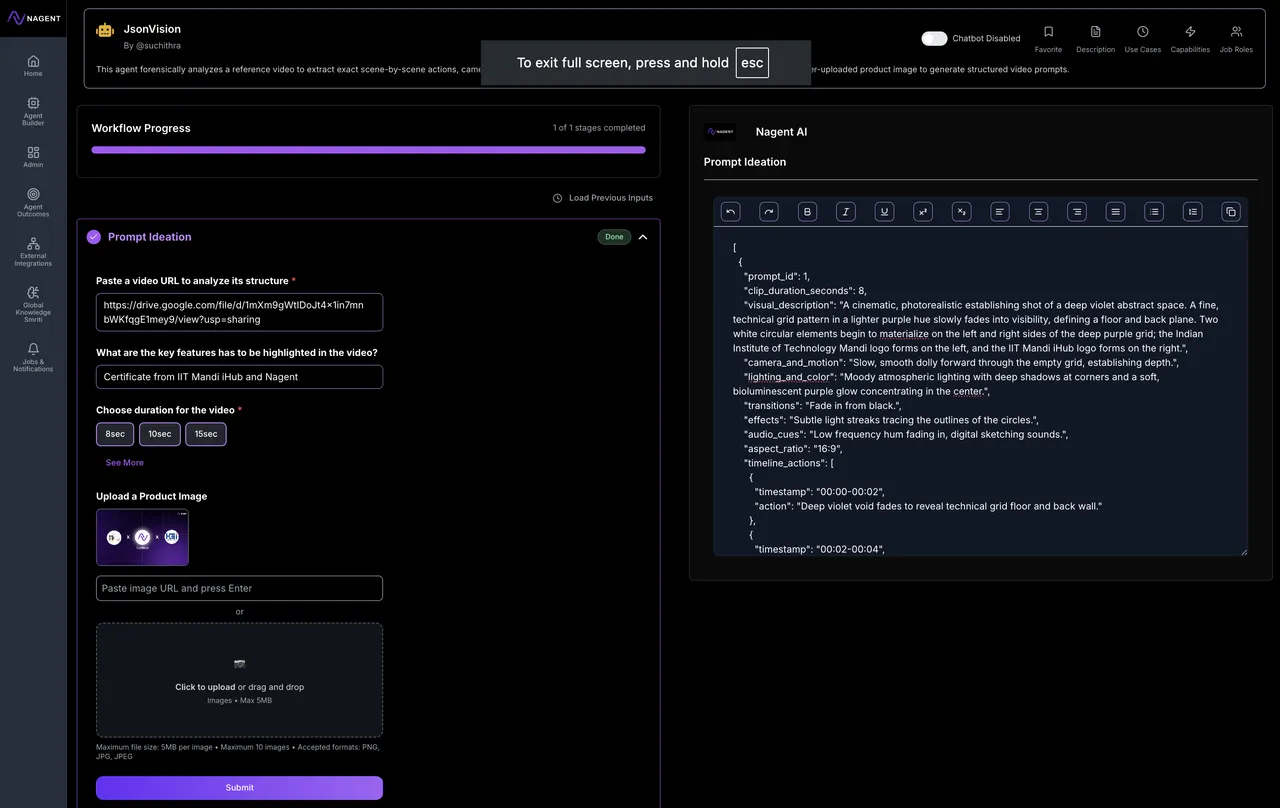
JsonVision automates that step.[^2] It reverse-engineers videos into their scene mechanics and converts them into structured video prompts. Feed it a high-performing competitor ad or a past top-creative, and it produces a production brief — motion, composition, lighting, structure — that can be applied directly to your product images. That structured prompt then feeds directly into the production loop.
The result: your creative strategy is grounded in what actually stops the scroll, not what someone thinks looks good.
Where Do AI Tools for Ecommerce Ads Fit Into This Argument?
Most AI tools for ecommerce ads today assist individuals. The best ones restructure the team's workflow.
There's an important distinction between tools that help a copywriter write faster and agents that replace the handoff between copywriter and producer. The first type makes one lane of the relay race slightly faster. The second type eliminates the baton pass.
CROs should be asking a different question when evaluating AI tools for ecommerce ads: "Does this tool make one person faster, or does it collapse a workflow stage?" If the answer is the former, you've added a feature. If the answer is the latter, you've changed your architecture.
CREA — Creative Content Execution Agent helps content teams find and deploy the right Nagent agents for copywriting, video, social, and creative production at scale.[^1] It's the entry point for teams building this architecture — not a single tool, but a guide to the full agentic creative stack.
What Should a CRO Actually Demand From Their Creative Stack?
Three capabilities — anything less is still a relay race.
1. Brief-to-asset execution in a single workflow.
If your AI tools still require a human to move output from one tool to another, you have automation, not an agentic loop. Demand agents that execute brief → script → visual → format in one run.
2. Multi-format output by default.
A single piece of source creative should produce every platform format automatically. Reels, Shorts, Stories, static — one brief, nine variations minimum. Ad-Genie generates nine variations per brief as a baseline.[^3] That's the floor, not a premium feature.
3. A structured learning mechanism.
Every ad that runs produces a signal — what hooked, what converted, what flopped. Your creative stack should feed that signal back into the next brief. Nagent's KARMIC learning loop does this at the platform level — agents adjust their decision policies based on what actually performed.
Without all three, you're still manually assembling the plane while it's trying to take off.
What's the Payoff of Getting Creative Architecture Right?
More tests, faster learning, and compounding returns — without scaling headcount.
Creative velocity is a compounding advantage. A team that ships 100 ad variations per month runs more experiments than a team shipping 6. More experiments mean faster identification of winning creative angles. Faster identification means faster scaling of what works. That's a flywheel — and it starts with architecture, not hiring.
Teams using AI tools for ecommerce ads inside an agentic production loop typically see:
- Creative output volume: 4–6 ads per month → 100+ per month[^3]
- Production time per creative: 3–5 days → 10–20 minutes[^3]
- Agency revision rounds: 6–8 → 1–2 internal reviews[^3]
These aren't marginal gains. They change what's possible in a campaign cycle.
Explore the full creative agent stack on the Nagent marketplace or talk to the Agentic AI Lab about designing this architecture for your brand.
Related Reading
- How Ad-Genie Turns One Brief Into a Full Creative Campaign
- What Is KARMIC — And Why Agents Get Smarter Without Retraining
- CREA: Your Creative Team's Guide to Agentic Production
- Build vs. Buy: When to Use Pre-Built Agents for Creative Workflows
Frequently Asked Questions
What are the best AI tools for ecommerce ads in 2025? The most effective AI tools for ecommerce ads in 2025 are agentic — they execute entire workflows, not single tasks. Ad-Genie generates platform-ready video ads from one brief, handling scripting, scene composition, and multi-format adaptation automatically. JsonVision reverse-engineers winning video patterns into structured production prompts. Together, they replace three to four sequential human handoffs with a single continuous workflow.
Why is my ecommerce creative team always behind, even when we add headcount? Adding headcount to a sequential pipeline adds cost without removing friction. The bottleneck isn't individual speed — it's the handoffs between brief, script, production, and format adaptation. Each handoff adds waiting time. The structural fix is an agentic production loop that collapses those stages into one automated workflow, eliminating the queues entirely.
How does an agentic creative production loop work? An agentic production loop takes a single brief and executes every downstream stage — script, visual composition, format adaptation, and variation generation — without human file-passing between steps. Platforms like Nagent coordinate this through agents like Ad-Genie, which outputs nine creative variations per brief in a single run, cutting production from days to minutes.
How many ad variations can an AI agent produce per brief? Ad-Genie, Nagent's video advertising agent, generates nine variations per brief as a baseline. Teams running multi-SKU campaigns have scaled from 4–6 ads per month to 100+ per month using this agentic workflow — without increasing creative team headcount.
What's the difference between AI-assisted creative tools and agentic creative production? AI-assisted tools speed up individual steps — a copywriter writes faster, a designer iterates quicker. Agentic creative production replaces the handoffs between steps — the waiting, the queuing, the file transfers. That architectural difference is why agentic systems produce order-of-magnitude output gains, not percentage improvements.
What's Next
If your creative pipeline still runs on sequential handoffs, you're competing with one hand tied. Book a free 30-minute demo at nagent.ai — we'll map your current creative workflow and show you exactly where agentic production closes the gap.
Sources
- CREA — Creative Content Execution Agent _(product doc)_
- JsonVision _(product doc)_
- Ad-Genie : The AI Agent for Video Advertising Creation _(product doc)_