AI Abandoned Cart Recovery for Fashion DTC Brands

AI Abandoned Cart Recovery for Fashion DTC Brands
Your 3-email drip sequence is leaving real revenue on the table. AI abandoned cart recovery for fashion DTC doesn't mean sending a fourth email — it means dynamically adjusting every recovery touchpoint based on inventory scarcity, real-time price sensitivity signals, and individual browse history. Brands running AI sales agents on abandoned-cart workflows typically recover 15–25% more carts than static drip sequences, without adding headcount or increasing discount spend.
Why Is Your Abandoned Cart Recovery Still Running on 2019 Logic?

Most DTC fashion brands still recover abandoned carts the same way: a 1-hour reminder, a 24-hour follow-up, a 72-hour discount email. That sequence made sense when personalization was expensive. It doesn't anymore.
The problem isn't the channel. Email still converts. The problem is the logic.
A static drip treats a first-time visitor browsing a $280 leather jacket the same as a loyalty member who abandoned a $45 tee. Same timing. Same message. Same discount. That's not recovery — that's volume play.
"The brands winning on owned channels aren't sending more emails. They're sending the right message at the moment a specific customer is most likely to act."
Static sequences can't read inventory pressure. They can't detect that the jacket the shopper abandoned is now down to 2 units in their size. They can't hold the discount for a price-insensitive buyer who just needed a nudge.
AI sales agents can do all three — simultaneously, at scale.
What Does an AI Agent Actually Do Differently in Cart Recovery?
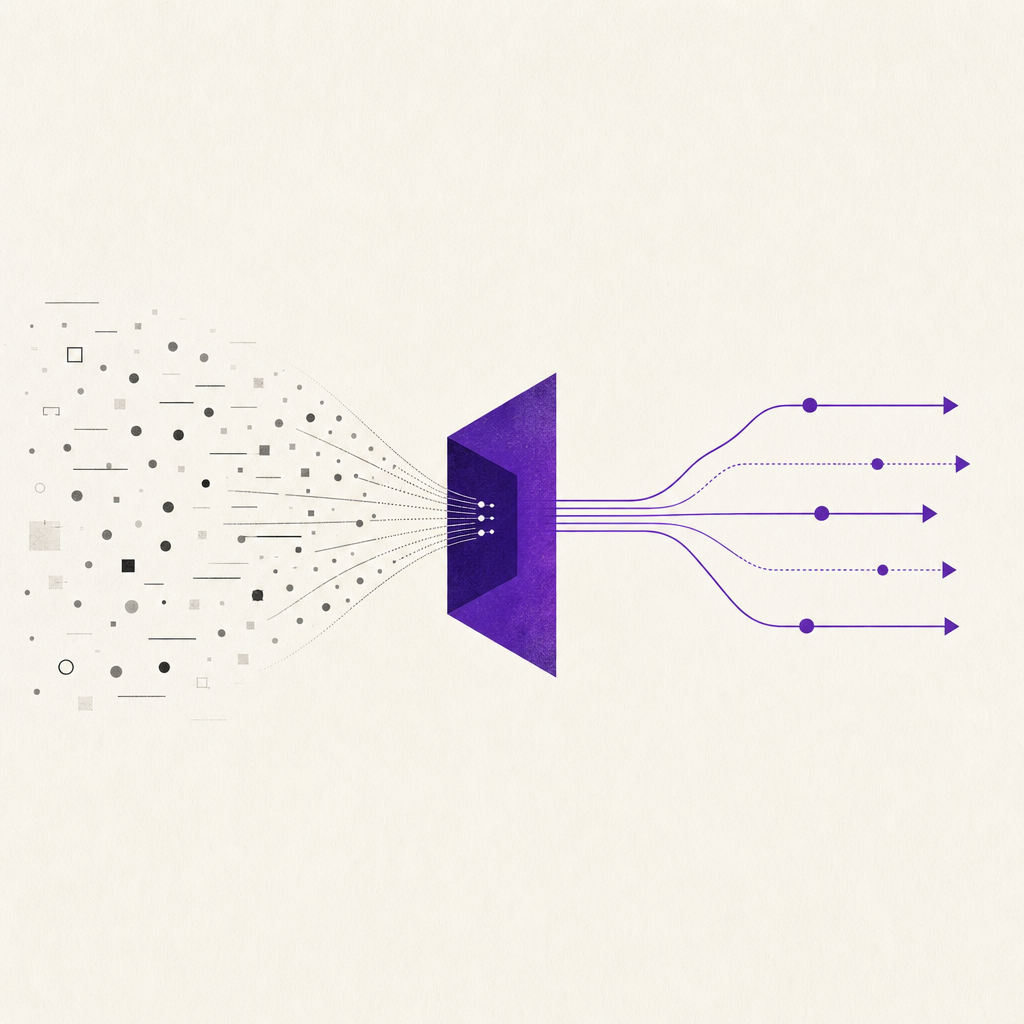
An AI agent doesn't just trigger messages on a timer. It reads signals, makes decisions, and acts — without waiting for a human to adjust the workflow.
Here's what that looks like in practice for a fashion DTC brand:
- Inventory scarcity detection. When stock in the shopper's size drops below a threshold, the agent fires a scarcity-anchored message within minutes — not on a fixed 24-hour delay.
- Price sensitivity scoring. The agent reads browse depth, time-on-page, and historical purchase data to decide whether to offer a discount, free shipping, or no incentive at all.
- Browse history context. If the shopper viewed three colorways of the same product, the agent surfaces the one most likely to convert based on category affinity — not just the last item in the cart.
- Dynamic message sequencing. Instead of a fixed 3-email cadence, the agent adjusts sequence length, timing, and channel (email, SMS, push) based on engagement signals from the first touchpoint.
This is the shift from instruction-based to intent-based operations — and it's the same architectural change reshaping every customer-facing workflow in consumer goods [^1].
What Does the Revenue Math Look Like for a 5% Incremental Recovery Gain?

A 5% improvement in cart recovery rate is worth more than most DTC teams realize.
Take a mid-size fashion DTC brand doing $8M in annual revenue. Industry benchmarks put cart abandonment rates in fashion at 70–85%. Assume 75% of site sessions with cart activity abandon. At a 2% baseline recovery rate (industry average for static drips), the brand recovers roughly $120K/year from abandoned carts.
Now add 5 incremental percentage points to recovery rate — bringing it from 2% to 7%. That same cart volume now generates ~$420K/year. The delta: $300K in recovered revenue from the same traffic, with no new acquisition spend.
The math compounds when you factor in:
- Reduced discount dependency (AI agents withhold discounts from low-sensitivity buyers, protecting margin)
- Higher average order value (context-aware upsell during recovery)
- Repeat purchase rate lift (a well-timed, relevant recovery message builds trust — a generic one erodes it)
This isn't a theoretical model. It's the same logic Nagent's KARMIC continuous learning loop applies across deployed agent workflows — every recovery action produces a labeled outcome, and agents adjust their decision policies automatically.
How Does Inventory Scarcity Change the Recovery Equation?
Scarcity is the most underused signal in fashion DTC recovery. When it's used, it works.
A shopper who abandoned a limited-edition colorway at 11 PM responds very differently to "Only 1 left in your size" at 7 AM than to a generic "You left something behind." The urgency is real. The message is specific. The conversion window is short.
Static drips can't act on live inventory data. The email was written weeks ago. The sequence fires on a timer.
An AI agent connected to your inventory feed reads stock levels in real time. When a threshold is crossed — say, 3 units remaining in the shopper's size — the agent fires the scarcity message immediately, regardless of where the shopper sits in the standard drip cadence.
This single capability — real-time inventory-triggered messaging — is worth the entire infrastructure investment for high-SKU fashion brands running limited drops.
The Virtual Photoshoot Agent shows how the same real-time, signal-aware architecture applies upstream in the creative workflow. The same intelligence layer that generates on-demand product visuals can feed contextual signals downstream into recovery sequences.
How Do AI Agents Handle Price Sensitivity Without Killing Margin?
The default recovery playbook discounts everyone. That's a margin problem disguised as a conversion strategy.
Not every abandoned cart needs a 15% off code. Some shoppers abandoned because they were interrupted. Some because they wanted to think. A small subset genuinely needs a price incentive. The challenge is telling them apart at scale.
Agent Smriti — Nagent's cross-session memory layer — gives agents the context to make that call. If a shopper has purchased twice at full price in the past 90 days, the agent skips the discount entirely and leads with social proof or a restock alert. If a shopper has a history of purchasing only during sale periods, the agent surfaces the incentive earlier in the sequence.
The result: discounts go to the buyers who need them. Margin is protected on the buyers who don't.
This is the difference between a recovery sequence that costs you 15 points of margin across the board and one that costs you 6 — on the carts that wouldn't have converted otherwise.
Which Nagent Agents Support Fashion DTC Cart Recovery Workflows?
Nagent's marketplace includes several agents that work together across the recovery workflow:
- Ad-Genie — generates platform-ready retargeting video ads from a single brief, producing up to 9 creative variations to run alongside email recovery sequences
- Offer Variation Agent — generates dozens of distinct copy angles for recovery messages, accelerating A/B testing cycles and reducing copy preparation time by 70–90%
- CopyCrafter AI — produces high-converting email and SMS copy tailored to brand voice, with audience-specific tone adjustment
- UGC Muse — scripts short-form social content to retarget abandoners on TikTok and Reels, with retention-focused hooks built for the first 3 seconds
These agents don't operate in isolation. Helix, Nagent's multi-agent orchestration layer, connects them into a single recovery workflow — brief in, coordinated multi-channel output out.
When Should a Fashion DTC Brand Move Beyond Static Drips?
Three signals tell you the static sequence has hit its ceiling:
- Recovery rate plateaued below 3% despite copy and timing tests
- Discount dependency increasing — you're protecting conversion rate by eroding margin
- Cart abandonment rate rising despite site optimizations — the problem is post-abandon, not pre-abandon
If two of these are true, a static drip won't fix them. The sequence isn't the problem. The absence of real-time signal intelligence is.
The agentic shift — from fixed workflows to intent-aware agents — is already reshaping how consumer brands operate at every layer of the funnel [^1]. Cart recovery is the highest-leverage, lowest-risk place to start. The data is already there. The channel is already warm. The shopper already showed intent.
An AI agent just acts on it faster, smarter, and without a human in the loop.
Related Reading
- The Agentic FMCG Playbook: How Agentic Systems Are Rewriting Consumer Goods
- Offer Variation Agent: Scale A/B Testing Without a Copywriter
- How Nagent's KARMIC Loop Turns Every Agent Action Into a Learning Signal
- Ad-Genie: From Brief to Platform-Ready Video Ad in Minutes
Frequently Asked Questions
What is AI abandoned cart recovery for fashion DTC brands? AI abandoned cart recovery replaces static email drip sequences with autonomous agents that read real-time signals — inventory levels, browse history, price sensitivity — and adjust recovery messaging dynamically. Instead of sending the same 3-email sequence to every shopper, agents personalize timing, channel, and incentive for each individual. Fashion DTC brands using this approach typically recover carts at 2–3× the rate of static sequences.
How much revenue can a DTC brand recover with AI-powered cart recovery? The revenue impact depends on your cart volume and current recovery rate. A brand at a 2% baseline recovery rate moving to 7% on the same cart volume can generate 3–4× more recovered revenue from abandoned carts — without increasing ad spend. The additional margin benefit comes from AI agents withholding discounts from price-insensitive buyers, which static drips can't do.
Can AI agents use live inventory data in cart recovery emails? Yes. AI agents connected to your inventory feed detect stock thresholds in real time and trigger scarcity-anchored messages immediately when a shopper's size or colorway drops below a set level. This is one of the highest-converting recovery triggers in fashion DTC — and it's only possible with a signal-aware agent, not a pre-scheduled drip.
How does Nagent protect margin while running AI cart recovery? Nagent's Agent Smriti memory layer gives agents cross-session context on each shopper's purchase history and price behavior. Agents use this to decide whether to offer a discount, free shipping, or no incentive. Shoppers with a history of full-price purchases receive non-discount recovery messages. Only price-sensitive segments receive incentives — protecting margin across the rest of the cart volume.
How quickly can a fashion DTC brand deploy an AI cart recovery agent? Nagent's pre-built agents — including the Offer Variation Agent and CopyCrafter AI — deploy in hours, not months. Helix orchestrates the multi-agent recovery workflow from a plain-English brief. Most teams run their first agent-driven recovery sequence within the same week they start.
What's Next
Your next abandoned cart doesn't need a fourth email. It needs an agent that reads the signal, picks the right message, and acts before the shopper moves on. Book a free 30-minute demo at nagent.ai and see the cart recovery workflow live.
Sources
- The Agentic FMCG Playbook _(pdf)_
- The autonomous bank in Agentic Era _(pdf)_
- Virtual Photoshoot Agent _(product doc)_