Why Fashion Marketers Are Ditching Studios for AI Agents
Why Fashion Marketers Are Ditching Studios for AI Agents
Fashion marketers are ditching studios for AI visual agents because the traditional shoot model is structurally broken. A single campaign shoot can consume 6–12 weeks of calendar time and five-to-six figures in production costs — then deliver assets that are locked the moment the invoice clears. AI visual agents for fashion marketing break that model entirely: on-demand composition, infinite iteration, and no rebooking fee when the creative brief changes at 9pm on a Thursday.
---
What does a traditional fashion shoot actually cost — beyond the invoice?
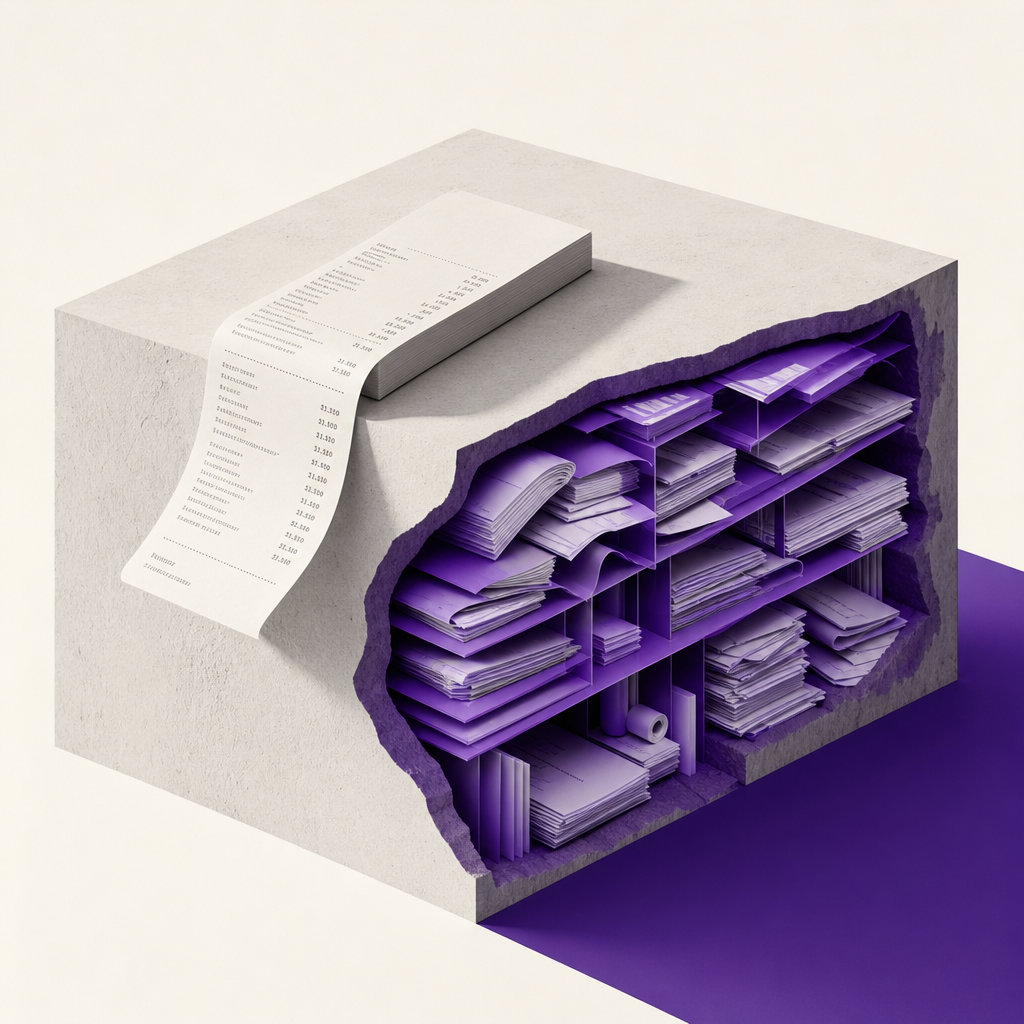
The line-item invoice is the smallest part of the problem.
Most Marketing Directors see the photographer's day rate, the stylist fee, and the studio hire. They rarely see the structural cost buried underneath:
- Brief-to-asset lag: 6–12 weeks from concept approval to final retouched file
- Iteration tax: Every change — swap a background, recolor a garment, reframe the model — requires a reshoot or heavy retouching, billed at hourly rates
- Version lock: Once the shoot is done, the asset library is fixed. New colorways, new markets, new formats? Repeat the process.
- Coordination drag: Photographers, stylists, models, location scouts, retouchers, and traffic managers — each one a scheduling dependency
A mid-market apparel brand running four seasonal campaigns per year can spend $400K–$800K on production before a single paid media dollar goes out the door.[^1] That number doesn't include the opportunity cost of campaigns delayed because the studio slot pushed out two weeks.
The hidden cost isn't money. It's speed.
---
How do AI visual agents for fashion marketing actually work?
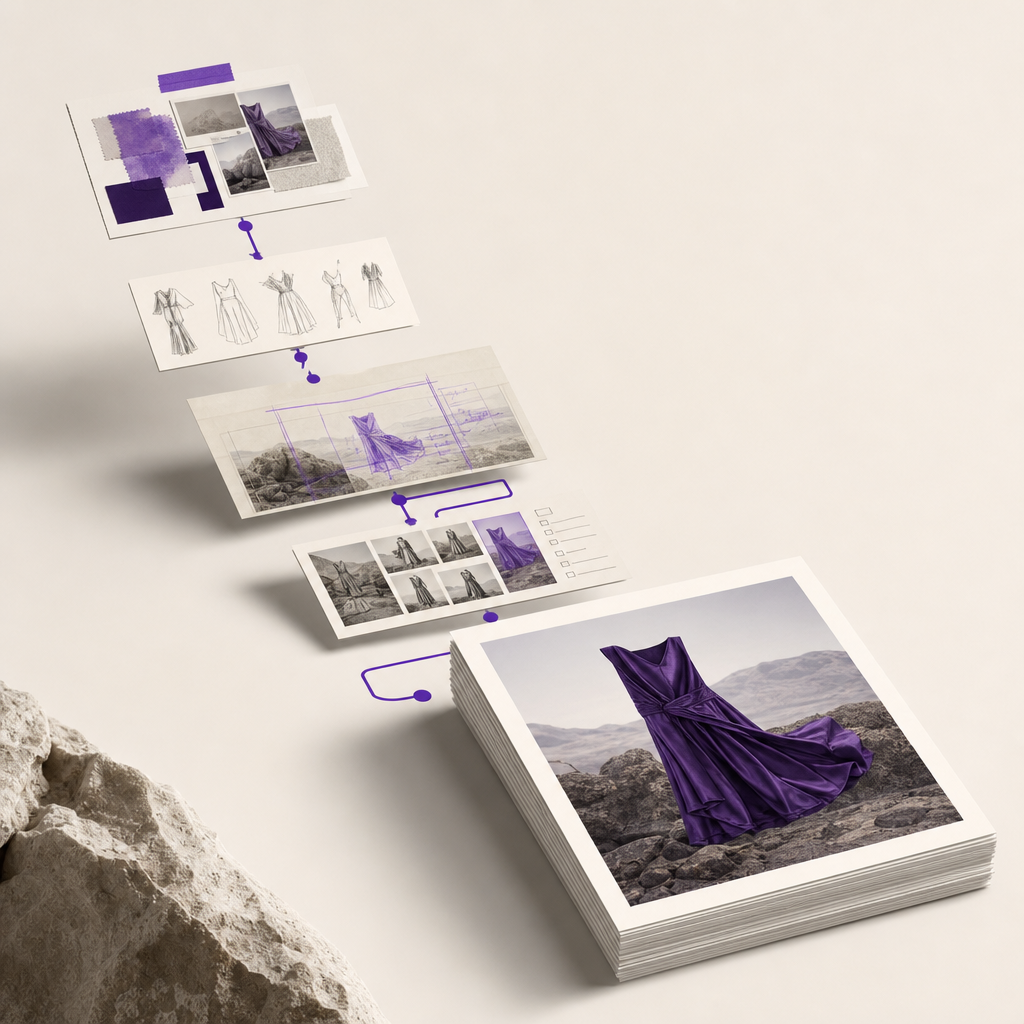
AI visual agents for fashion marketing compose, iterate, and deliver campaign-ready visuals through an orchestrated sequence of autonomous tasks — not a single prompt-to-image button.
This is where most marketing teams misunderstand the technology. They think "AI image generation." What they're actually getting with a purpose-built agent is a multi-step workflow:
- Brief ingestion — the agent parses brand guidelines, SKU data, and creative direction
- Composition — it generates scene layouts, lighting treatments, and model positioning
- Iteration loops — it runs variants against defined constraints (colorway, format, aspect ratio)
- Quality gate — it checks outputs against brand standards before surfacing to the creative team
- Asset delivery — final files packaged by channel (paid social, OOH, e-commerce PDP, email)
Nagent's Agent Orchestration layer manages the sequencing. Each step is a discrete agent with a defined role — the equivalent of a creative team, but executing in parallel rather than sequentially.
The result: what took six weeks now takes hours.
---
Why is iteration freedom the real competitive advantage?
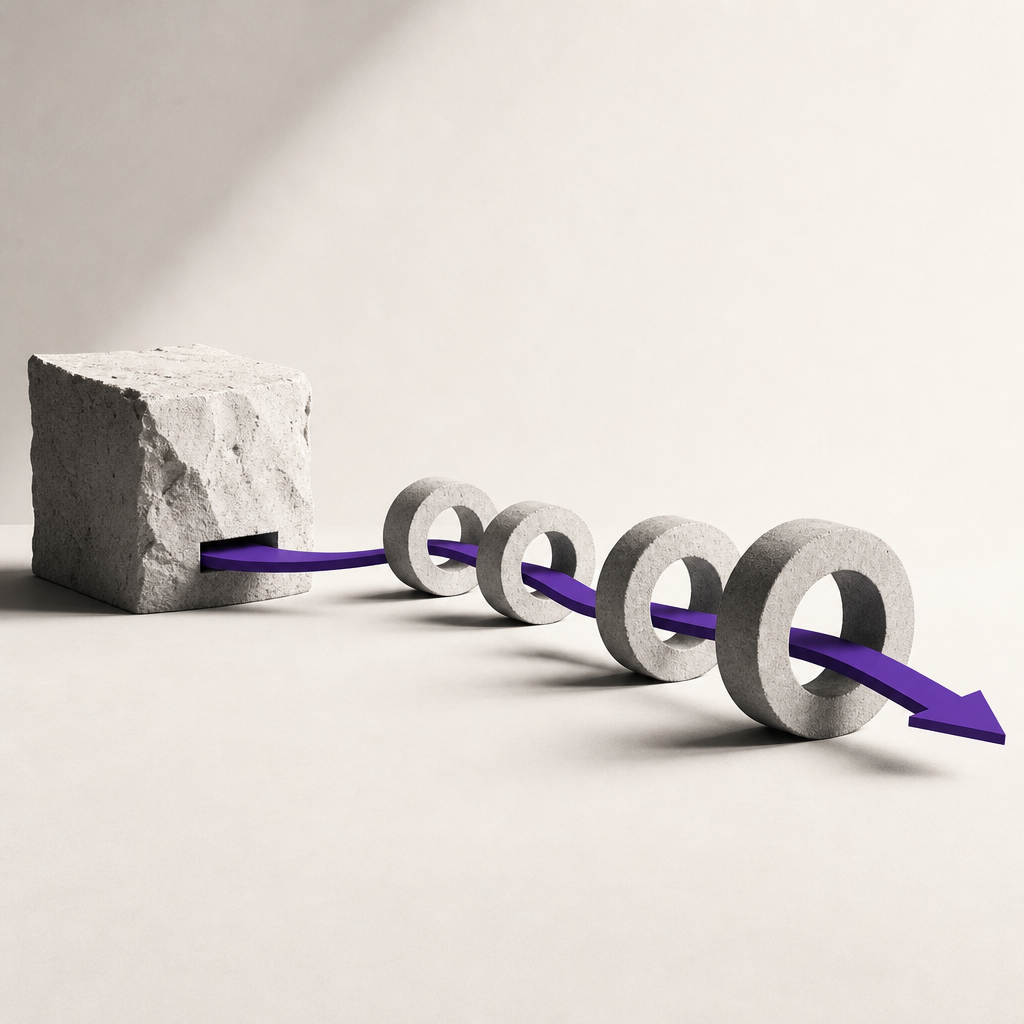
Speed is the obvious win. Iteration freedom is the structural one.
Traditional shoots produce a fixed asset pool. A fashion brand launching a jacket in seven colorways across four markets historically needed to choose: shoot all variants (expensive) or shoot one and digitally recolor (inconsistent, time-consuming). Neither option supports true creative testing.
AI visual agents for fashion marketing change the economics of iteration completely. Running 40 creative variants costs the same as running four. That means:
- A/B testing creative at the concept stage, not after launch
- Localizing visuals for different markets without separate shoots
- Responding to trend shifts mid-season without a production restart
> "The brands winning in digital commerce aren't the ones with the biggest production budgets — they're the ones who can test and learn fastest."
Nagent's Build Craft executes these iteration workflows at scale, with Smriti's memory layer retaining brand context — color palettes, tone, typography rules, approved model assets — across every run. The agent doesn't forget what "on-brand" means between campaigns.
---
What does the shift from studio to agent actually look like in practice?
Consider a D2C apparel label preparing for a spring drop.
Old model: Brief locked in January. Studio booked for February. Shoot in March. Retouching through April. Assets live in May. Campaign window: six weeks.
Agent model: Brief ingested by the agent in week one. First asset batch delivered in 48 hours. Creative team reviews, requests 12 variants. Agent returns variants overnight. Final assets approved and deployed in week two. Campaign window: the full season.
The creative team didn't disappear. They moved upstream — from executing production logistics to making higher-order creative decisions. The agents handle the mechanical work. The humans handle judgment.
This is the model Nagent's Agent Studio is built for: human-in-the-loop orchestration where creative directors set constraints and agents operate within them autonomously.
---
When should fashion brands keep traditional studio shoots?
Not every shoot belongs to an agent — and that's a deliberate position, not a hedge.
Hero campaign imagery with a specific celebrity talent, high-fashion editorial with a named photographer's distinct visual language, or shoots requiring physical garment movement (drape, texture, fabric behavior) still benefit from on-set production. These are judgment calls with brand equity on the line.
The smarter frame: use studio shoots for hero assets and AI visual agents for scale assets. One shoot generates the hero. The agent generates the 400 downstream variants — PDPs, social cuts, market localizations, seasonal refreshes.
The brands pulling ahead aren't choosing one over the other. They're deploying both in the right context, managed through a unified orchestration layer rather than two separate workflows.
---
Related reading
- How Agentic Systems Are Rewriting Consumer Goods Marketing
- Agent Orchestration: How Nagent Manages Multi-Agent Workflows
- What Is KARMIC? Nagent's Continuous Learning Engine Explained
- Fashion & Apparel Solutions on Nagent
---
Frequently Asked Questions
What are AI visual agents for fashion marketing?
AI visual agents for fashion marketing are autonomous software agents that compose, iterate, and deliver campaign-ready visual assets — handling tasks from brief ingestion to final file packaging. Unlike single-model image generators, they operate as orchestrated multi-step workflows with brand memory, quality gates, and channel-specific formatting built in. Nagent's Agent Orchestration layer manages the sequencing across each agent in the pipeline.
How much faster are AI visual agents compared to traditional fashion shoots?
Traditional fashion campaigns run 6–12 weeks from brief to final asset. AI visual agent workflows — as deployed through Nagent's Build Craft — can return first-batch assets within 48 hours of brief ingestion, with iteration cycles measured in hours rather than weeks. The exact timeline depends on campaign complexity and the number of SKUs involved.
Do AI visual agents replace creative teams in fashion marketing?
No. AI visual agents handle the mechanical execution — composition, variant generation, format packaging. Creative directors and brand leads move upstream: setting constraints, making judgment calls on brand equity, and approving final outputs. The agent operates within the creative team's defined parameters, not instead of them.
How does the agent remember brand guidelines across campaigns?
Nagent's Smriti memory layer stores brand context — approved color palettes, typography rules, tone of voice, model asset libraries — and applies it consistently across every agent run. This prevents brand drift across high-volume iteration cycles without requiring manual briefing at the start of each workflow.
What types of fashion visuals are best suited to AI visual agents?
Scale assets are the primary use case: product detail page (PDP) imagery, paid social variants, market localizations, seasonal colorway refreshes, and email creative. Hero campaign imagery involving specific talent, editorial photography with a defined auteur visual style, or shots requiring physical fabric movement remain strong use cases for traditional production.
---
What's next
See how Nagent's AI visual agents fit into your campaign production workflow — book a free 30-minute demo at nagent.ai.
Sources
- The Agentic FMCG Playbook _(pdf)_