
Nagent vs Superscale: profit is not a creative metric
An ad engine can win the auction. Only a team can own the funnel. Nagent vs Superscale on growth that is judged by profit.
Superscale is a formidable ad engine for brands whose growth lives in the Meta and Google auction, covering research, creative, launch and analysis. Nagent is built for growth judged by profit: a team of AI coworkers and your people that carries the work past the click, across search, answer engines, social, sales and customer experience.
Nagent in one minute
Nagent is Multiplayer AI for end to end growth: a team of AI coworkers and your own people, working together in one workspace across marketing, sales and customer experience. Three things make it different. You approve the AI coworkers' work until they earn the right to act on their own. They carry the work all the way to pipeline and customers, not just content. And where your plan includes it, a Nagent marketer joins your team and owns the number with you.
At a glance: Superscale and Nagent
| Superscale | Nagent | |
|---|---|---|
| Built around | Ad creative on Meta and Google | Your growth number |
| Who does the work | Agents for ad research, creative and launch | AI coworkers and your people, in one workspace |
| Who decides what AI can do alone | You approve the ads | A track record each AI coworker earns, approved by you; budgets always need a person |
| How far the work reaches | Paid ads, from research to analysis | Paid, search, answer engines, social, sales and customer experience |
| Who owns the result | Your team | Your team, with a Nagent marketer where your plan includes it |
Overview
Every direct to consumer founder knows the Tuesday morning ritual. You open the Meta Ad Library, type in your three biggest competitors, and scroll. One of them has launched fourteen new creatives since Friday. Another has found a hook that is clearly working, because they have made nine versions of it. You screenshot the best ones, send them to your designer with a note that says we need something like this by Thursday, and the treadmill turns another notch.
It is exhausting, and it is expensive, and for most brands it has become the default shape of growth. Attention on Meta and Google is rented by the impression. Creative wears out in days. The only way to keep renting it is to keep producing, testing and replacing creative faster than your competitors do.
AI has made that treadmill dramatically faster. It has not made anyone ask whether the treadmill is the whole race.
The best ad engine in the market
Superscale is one of the sharpest products built for that treadmill, and its homepage opens with a line we admire: marketing built by AI, judged by profit. On its website, it describes itself as the operating system for marketing teams, freelancers and agencies that scale brands on Meta and Google with AI, and it names investors including Creandum and Interface, and ElevenLabs, among its backers.
As its website lays it out, the platform covers the full creative loop for paid social and search. It starts with context and research, analysing thousands of ads from competitors in your niche to find what is working. It moves through creative strategy, static and video ad generation, and placements and compliance, with launch and scheduling on the way, and it finishes with analysis. Purpose built agents with names like Brand Researcher, Audience Researcher, Static Ads Designer and Video Ad Editor do the work.
Its pitch to the founder on the treadmill is direct, and very good: your competitors launched 47 new ads, and Superscale already knows which ones work. The case studies on its website back it up. Taxfix lifted click through rates by 45 percent. SumUp produced more than 120 Meta ads across products in eight languages.
If your growth lives and dies in the ad auction, this is a formidable engine.
Profit is decided after the click
But look again at that headline. Judged by profit. It is the right standard, and it is exactly why an ad engine, however good, cannot meet it on its own.
Profit is not a creative metric. A winning ad earns a click. Whether that click becomes profit depends on everything that happens next: whether the landing page loads and converts, whether the brand turns up when the same customer asks ChatGPT or Google for a recommendation a week later, whether the business buyer who clicked is researched and written to by someone who understood his company, whether the order arrives when promised, and whether the customer buys again. A 45 percent lift in click through rate is a real achievement. If the pages behind it drop out of Google's index, or the leads it produces sit untouched in a spreadsheet, the profit never arrives.
There is also a structural problem with the treadmill itself. Paid attention is rented. The moment you stop paying, it stops. Every brand that wins on Meta alone is, in effect, bidding against its own competitors' creative budgets forever. The durable growth, the kind that compounds, comes from the assets you own: organic search, answer engine visibility, a community, a sales motion, a customer base that returns. An ad engine makes you better at renting. It does not help you own.
We call this the creative treadmill, and the way off it is not a faster treadmill. It is a team that owns the whole funnel.
The same Tuesday, in Nagent
Go back to the founder scrolling the Ad Library on Tuesday morning. In Nagent, she does not start her week chasing a competitor's fourteen new creatives. She opens a workspace where her growth team has already been at work.
NIA, the AI coworker for paid ads, has tested new creative overnight and found that one campaign is converting well enough to deserve more budget. But NIA does not move the money on its own. The budget increase waits in the founder's inbox, with the numbers behind it, until she says yes. That rule never changes, however senior NIA becomes. On the same screen she can see what the rest of the team did: the AI coworker for search checked that the product pages her ads point to are still showing up on Google, and the social calendar for next week is ready for review.
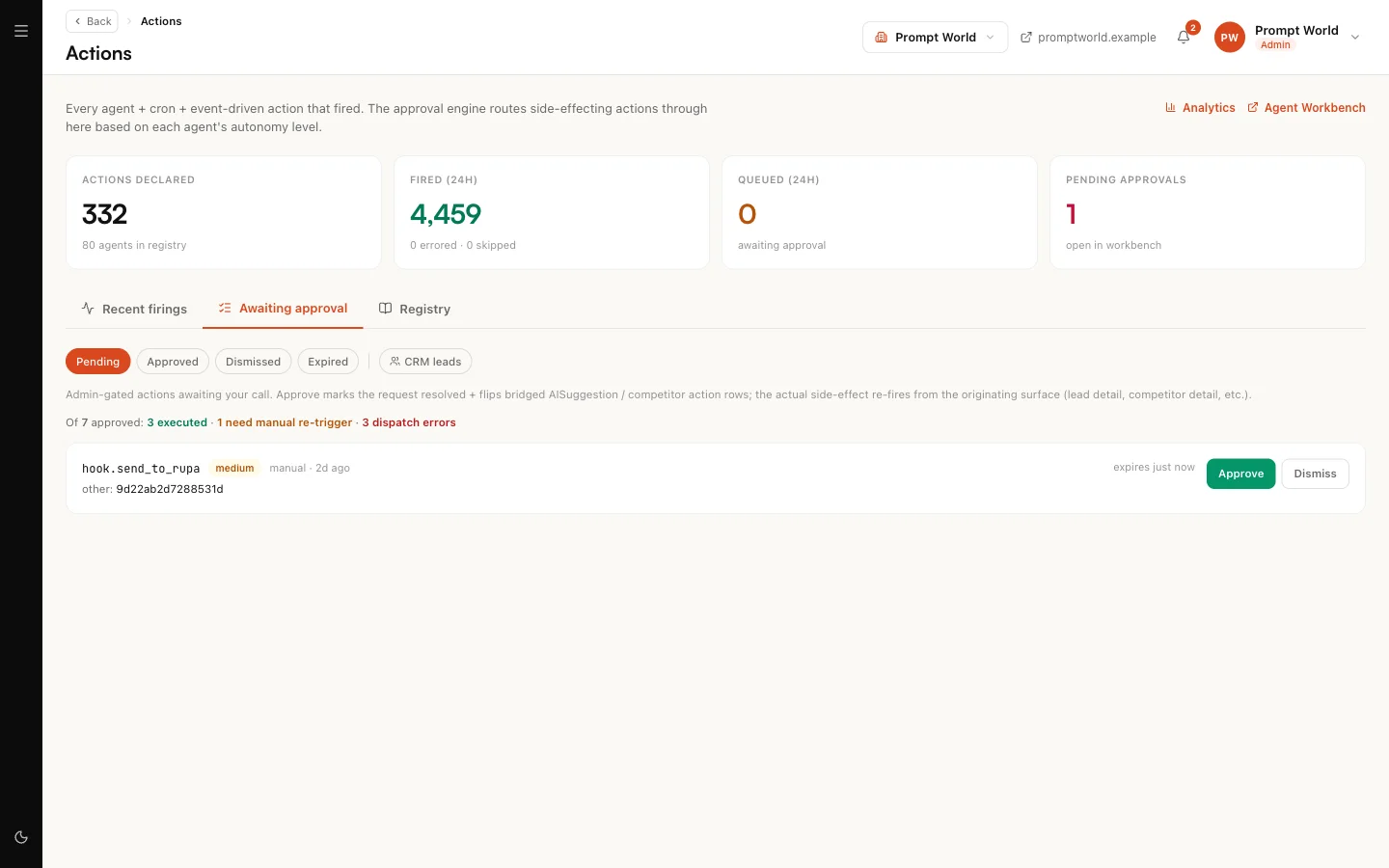
Then the work continues past the click, which is where an ad engine stops. The campaign brought a few corporate buyers to the site. NORA, the AI coworker for outbound, has researched each one and drafted a first message. The founder's sales lead reads them before anything is sent.
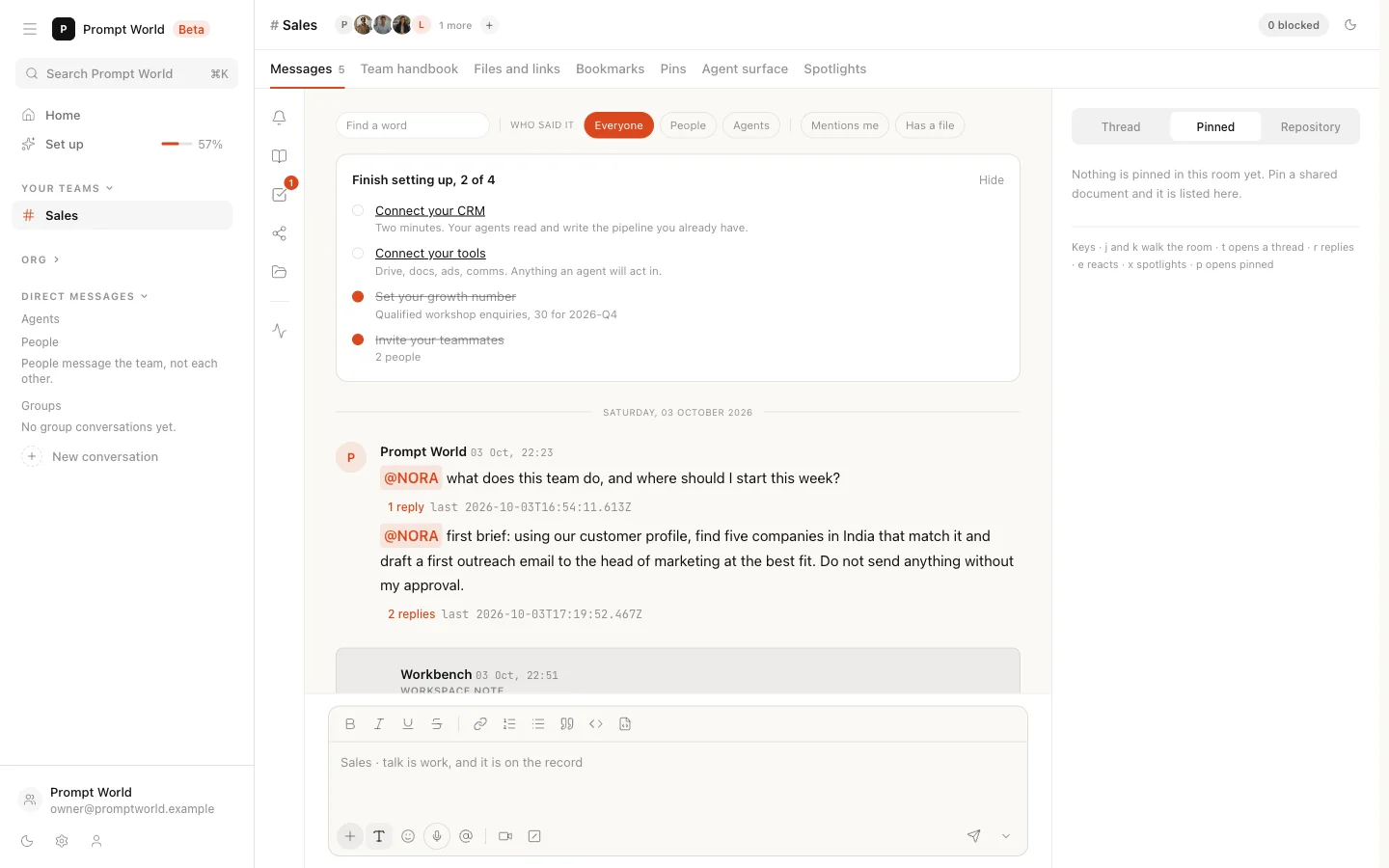
And because the whole team works in one place, NIA can see which campaigns produced customers, not just clicks. That is what judged by profit actually requires. Where her plan includes it, a Nagent marketer sits in the same workspace and owns that number with her.
Step off the treadmill
A faster ad engine makes you better at renting attention. If you mean it when you say marketing should be judged by profit, you need a team that owns the whole funnel, from the first impression to the repeat order.
Superscale product details are taken from Superscale's public website as it appeared in September 2026.
See it working
If your problem is growth and you want a team rather than a toolkit, see the plans on the pricing page, or book a walkthrough with the team.
Frequently asked questions
What does Superscale do for brands advertising on Meta and Google?
On its website, Superscale describes itself as the operating system for marketing teams, freelancers and agencies that scale brands on Meta and Google with AI. It covers the creative loop for paid social and search, from competitor ad research and creative strategy to static and video ad generation, placements and compliance, launch and analysis, using agents such as Brand Researcher and Video Ad Editor.
Why is profit not a creative metric for a growth team?
A winning ad earns a click. Whether that click becomes profit depends on everything that happens next: whether the landing page converts, whether the brand turns up when the customer asks ChatGPT or Google for a recommendation, whether business buyers are researched and written to, whether the order arrives when promised, and whether the customer buys again.
What is the creative treadmill in paid social advertising?
It is the cycle of producing, testing and replacing ad creative faster than your competitors, because attention on Meta and Google is rented by the impression and creative wears out in days. AI has made the treadmill faster. The way off it is not a faster treadmill but a team that owns the whole funnel, including the assets you own, such as organic search and returning customers.
Can Nagent's paid ads coworker increase a campaign budget on its own?
No. NIA, the AI coworker for paid ads, can test new creative overnight and find a campaign that deserves more budget, but the increase waits in the founder's inbox, with the numbers behind it, until she says yes. That rule never changes, however senior NIA becomes.
What happens after an ad click in Nagent?
The work continues. When a campaign brings corporate buyers to the site, NORA, the AI coworker for outbound, researches each one and drafts a first message that the sales lead reads before anything is sent. Because the whole team works in one place, NIA can see which campaigns produced customers, not just clicks.
What results has Superscale shared from its customers?
Superscale's website cites case studies in which Taxfix lifted click through rates by 45 percent and SumUp produced more than 120 Meta ads across products in eight languages. Its pitch to founders is that when competitors launch 47 new ads, Superscale already knows which ones work.
Further reading
- The comparison hub: Nagent beside the agent platforms buyers shortlist, sourced and dated
- The Earned Autonomy Ladder: How much an AI agent may do alone, decided by its record
- Anatomy of an Agent: A Configuration, Not a Program: The ten declared parts every Nagent agent is built from
- How to evaluate an agentic AI platform: Six criteria, three grades of evidence and one bounded pilot
- Autonomy is not a setting: Nagent vs NoimosAI
- Nagent vs Jasper: a hundred agents is not a team
- Nagent vs Okara: the founder is not a queue
Sources
Facts about Superscale are as its own pages and the reports below stated them, checked on 30 September 2026. Products change; the linked pages are the current word.
- Superscale, the autonomous AI marketing agent for performance advertising https://superscale.ai/